
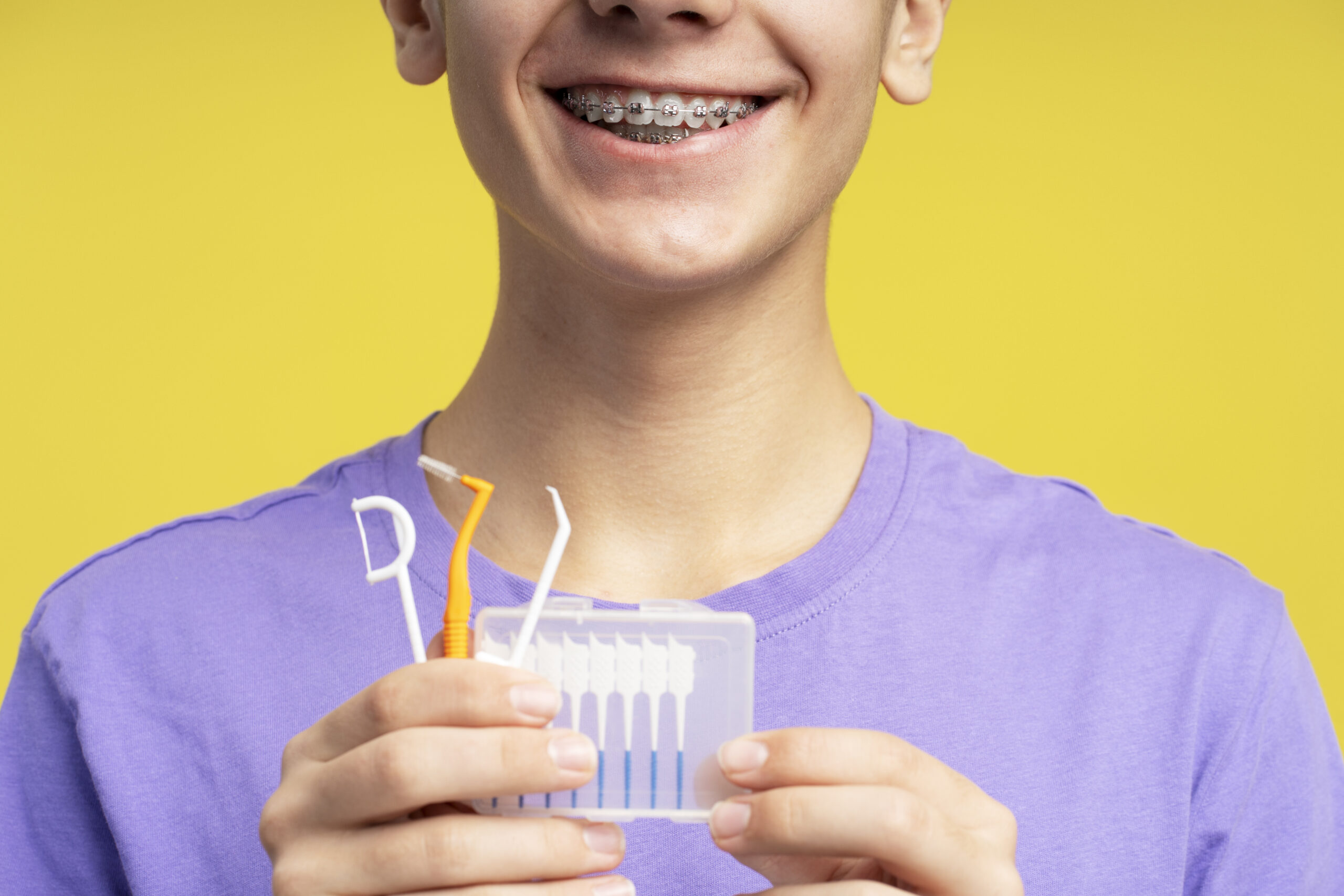
Orthodontic treatment is a big investment of time, money, & effort. We want to help all of our patients be as successful as possible to get the best results. Here are some ways to set you or your child up for success throughout the time in braces. (I’ll post ideas for aligner success in an upcoming blog post.)
Clean, Healthy Teeth
Learning to clean around braces from the very beginning is so important! Braces and wires don’t cause cavities, or tooth scars, or gum disease, but they don’t make it easier to clean your teeth and gums. If you don’t take the time to clean them properly, the result can be dramatic and irreversible.
In our new patient kit, we include two types of flossers, some cleaning picks, and a laminated guide that shows how to use your toothbrush around the braces. Spending some time the first few days to learn how to use those tools will make SUCH a difference in how clean and healthy your teeth and gums are throughout treatment. If you’re struggling at home, come back and ask us for a review! We’re happy to help you learn how to take care of your teeth.
Many patients, especially those with a palatal expander, find a Water Pik (or other water flossing tool) to be very helpful in cleaning the hard to reach or see areas. These tools are fairly inexpensive and can be found easily online or at big box stores. Using them nightly to prevent food from sitting on your teeth all night is a great way to keep everything healthy.
It’s important to have regular dental check-ups and cleanings throughout treatment. Although we’ll see you regularly, we don’t look specifically for cavities and don’t do the gum cleanings that your general dentist does. Many dentists prefer that we take the wires out of the braces so that they can clean more easily. Please check with your dentist to see if they prefer the wires to be removed and we’ll work to coordinate the appointments. If possible, we try to make it coincide with your regular orthodontic appointment.
Foods
Having foods available that are easy to eat with braces can make life easier for the braces-wearer. And on the other side of that coin, so can *not* having the temptation of foods they can’t eat! The list of do-not-eat foods is short – anything really hard or sticky or crunchy like ice, taffy, hard candies, hard crunchy kettle chips. The list of be-careful-with-these foods is longer. We don’t want you biting into food with your front teeth, so hard bread or rolls, pizza crusts, apples need to be cut or torn into pieces before eating them.
Cooked meats and vegetables, pasta, rice, soups – all these are really great choices with braces. Many patients feel better with soft cool (or cold) foods the first few days after a braces adjustment appointment. Things like popsicles, yogurt, ice cream, smoothies, regular or protein shakes can be good ways to get some food in while their teeth are sore.
Mouth Protection
If the braces wearer plays a sport with any chance of contact (basketball, soccer, football, martial arts – and more!), a mouthguard is a really smart investment. The risk of injury with braces isn’t that the tooth is more likely to break, but we’ve seen some pretty bad injuries to the lips and tongue getting smashed by or stuck in the braces. There are several choices available on the market specifically designed to work around braces.
Be prepared
Don’t plan appointments for adjustments right before a big test or performance, or when you’re headed on vacation. Make sure you have and know how to use wax to deal with any poking wires or other issues that may arise. If you’re going to be away from home, be sure to bring the wax and extra elastics or cleaning supplies so that you can stay on track with the treatment progress. Coordinate ahead of time with our office and the general dentist’s office when you have a cleaning. Not doing so results in extra appointments (& discomfort) for the patients.
There are lots of little things that will be different with braces. Hopefully, these ideas will make everyone’s life a little easier!
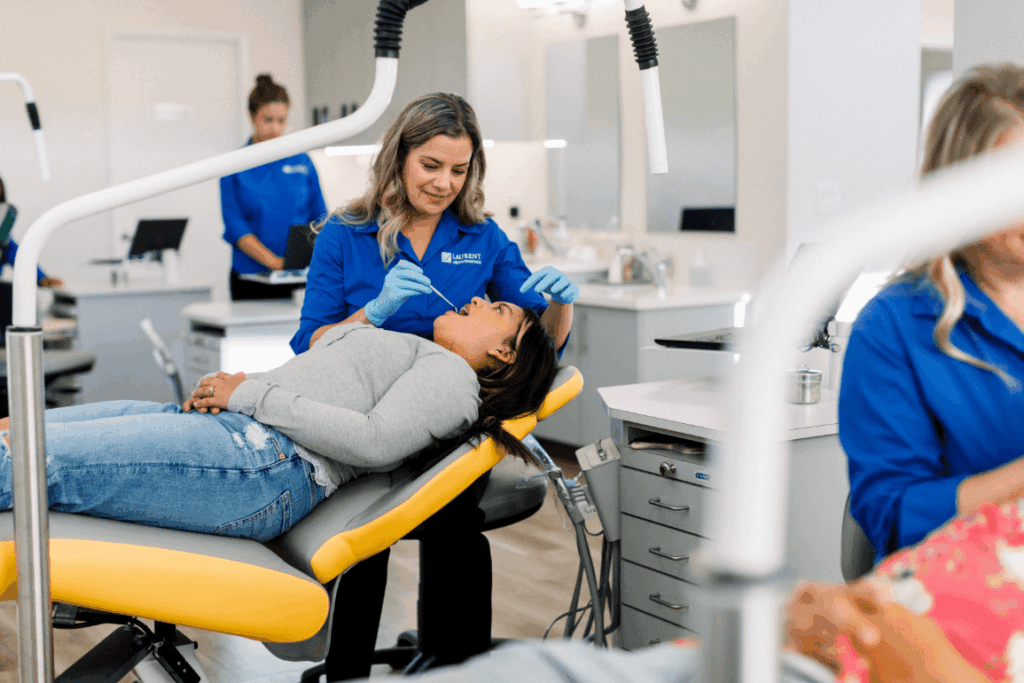
The Laurent Orthodontics team is happy to talk more about how to support your child through their treatment. Bring all your questions to your free consultation appointment – give us a call at (707) 938 – 5255 to schedule.